
Boxed set guide
Inside our mushroom grow kits, you will find a straw growing block fully colonised with mycelium, and a small spray bottle.
Tear open the front of the cardboard box along the perforation, then use a clean, sharp knife or scissors to cut an X shape through the window into the plastic bag (it's okay to cut a little into the block as well). Leave the cut edges of the plastic bag in place, as these will help retain moisture.
Open the top of the cardboard box and remove the spray bottle. Fill it with tap water and spray liberally on the X-shaped area. Spray your kit at least 2-3 times a day, more often in hot weather. If you don't see any tiny water droplets on the surface of the plastic, it's time to spray!
You don't need to take the grow block out of the box. Place the kit with the box on a plate in the most humid, regularly ventilated place in your home, away from direct sunlight. The best place is usually the kitchen counter, near the sink. Choose a place where you will regularly see it and you won't forget to spray it.
In very hot weather, or if you don't have time to spray as often, you can also make a humidity tent. Take a garbage bag or other plastic bag and make many holes in it, about 1 centimeter in diameter. Since mushrooms and mycelium both breathe in oxygen and release carbon dioxide, proper ventilation is essential! Cover the kit with the humidity tent. When spraying, lift up the bag, spray the kit and the inside of the bag, then place back the bag. Once baby mushrooms have appeared, fresh air is especially important, so remove the humidity tent and continue spraying as usual.
The ideal growing temperature varies depending on the variety.
-
for grey oyster mushrooms minimum 10, maximum 30°C, ideally 15-23°C
-
for golden oyster mushrooms minimum 15, maximum 32°C, ideally 20-28°C
-
for pink oyster mushrooms minimum 15, maximum 35°C, ideally 23-30°C
In practice, each variety can be grown year-round in an average apartment.
The mushroom mycelium senses the increased oxygen levels and within 5-14 days produces so-called “pins”, or baby mushrooms. Once the pins appear, the mushrooms begin to grow spectacularly rapidly and are typically ready for harvest within 2-5 days.
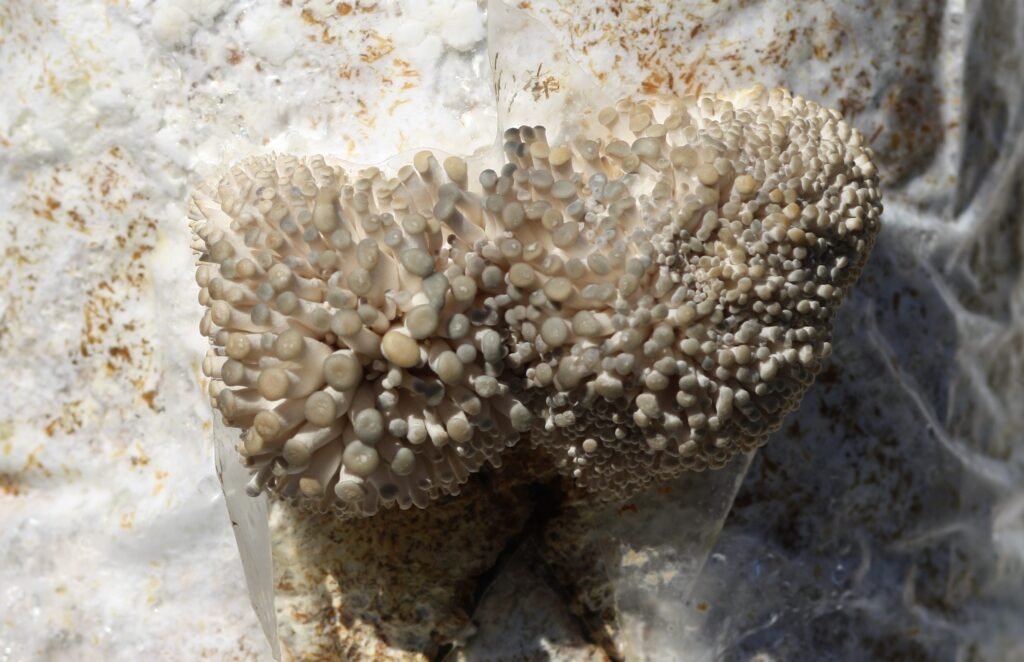
To harvest mushrooms in perfect condition, keep an eye on the caps. The ideal time is when most of the caps have almost completely flattened but have not yet started to bend upwards.
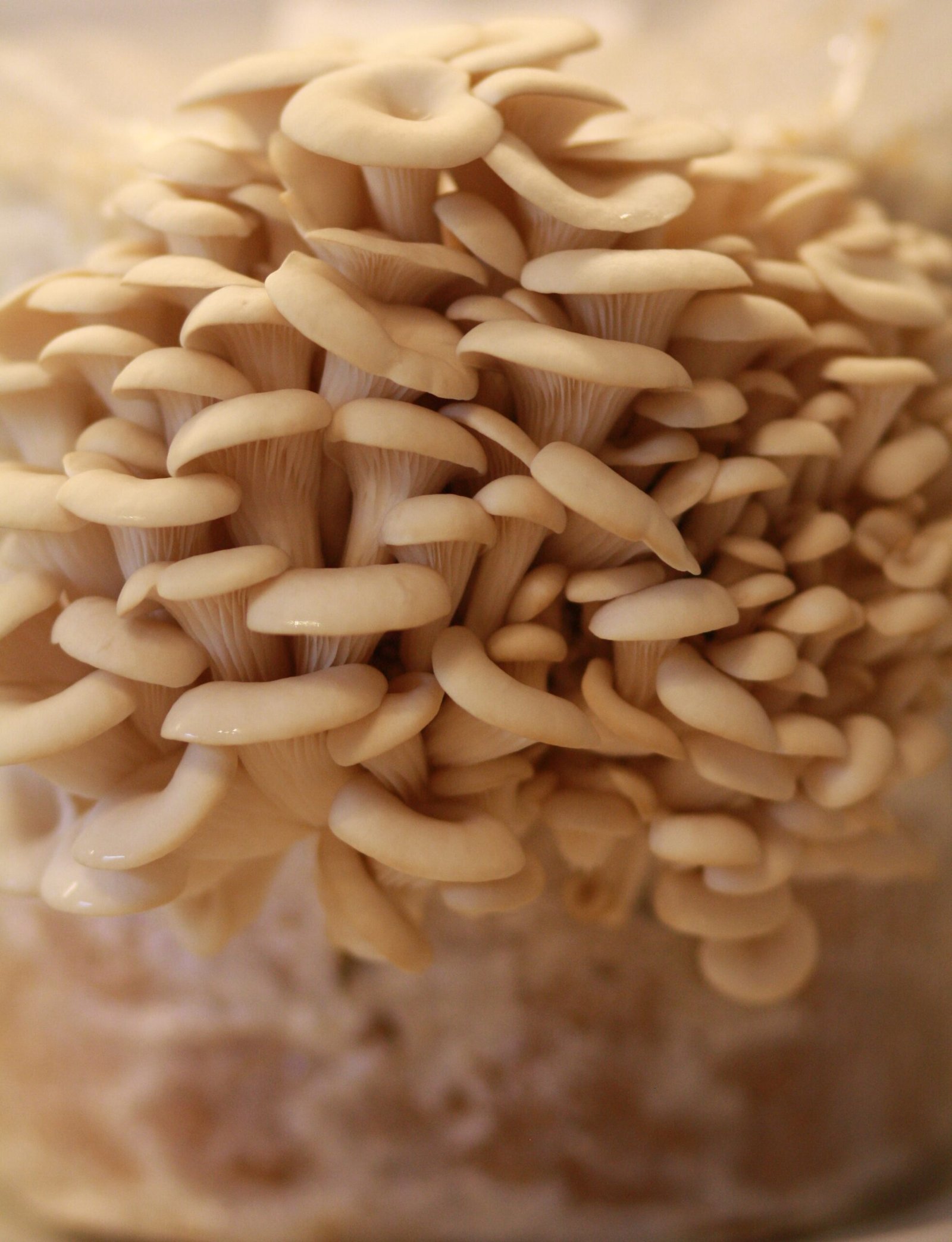
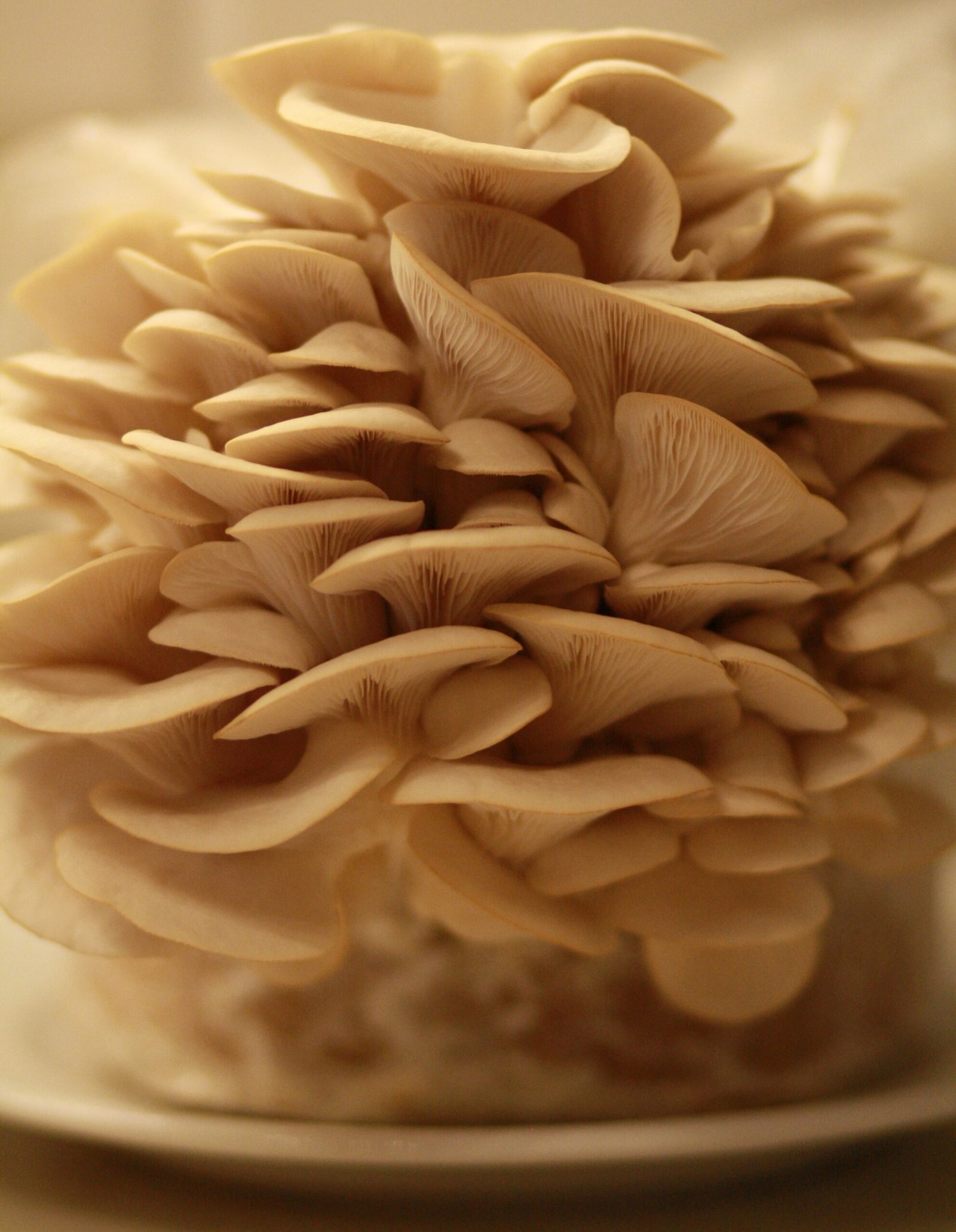
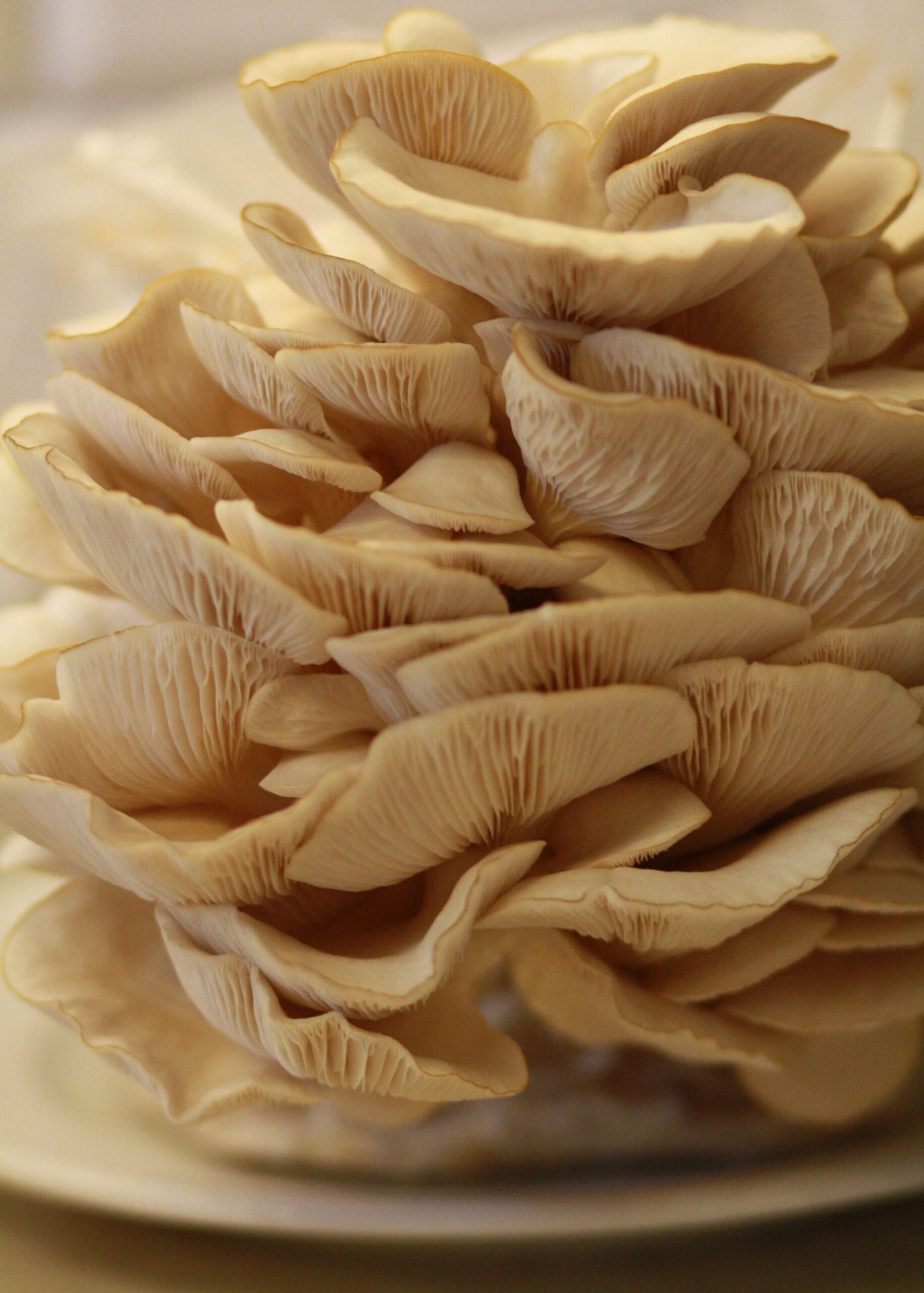
When harvesting, it is best to remove the entire mushroom cluster and any smaller mushrooms or mushroom parts at the same time so that the mycelium can prepare for the next harvest.
To remove the mushrooms, use a sharp knife and cut them as close to the block as you can. It is important not to leave anything on the block, as any remaining mushroom parts can slowly start to spoil, which can spread to the entire block. There is no need to wash them, as the rest of the mushroom has not come into contact with anything.
Use you fresh mushrooms immediately or store them in a paper bag in the refrigerator, where they will keep for a few days.
Our kits can produce up to 3-4 times!
Your first harvest is guaranteed by us, but usually one kit can produce 3-4, rarely even 5 times. The yield depends mostly on the environmental conditions: a delicate balance of humidity, oxygen and light. Since every room has a different microclimate, finding these optimal conditions may require some experimentation.
The first crop (also called flush) is usually the largest, then gradually, at increasingly longer intervals, smaller crops appear as the mycelium consumes all available nutrients and water.
After harvesting, it is useful to let your kit rest for 2-3 days and not humidify it at all. Let it dry out a bit, imitating the weather changes that occur in nature. After 2-3 days, continue humidifying as usual, and with a little patience, the mushrooms will probably appear again. It is not necessary to cut open the bag at another area, it can produce again in the same area.
If it seems too dry, try using a humidity tent (see above). If the new crop hasn't started 3 weeks after harvest, there's still hope! You can also try to kickstart it by soaking the block. To do this, remove the growing block from the box and place it cut side down in a bowl of cold water for 30 minutes. Then, drain off the excess water and wipe the bag dry, then put it back in the box and continue to spray as usual.
If the block shows no signs of life after 4 weeks or turns greenish, it's probably time to say goodbye.
But if you have a garden, you can give it a new life! Crumble it up as mulch in your vegetable or flower beds, or bury it not too deep in a shady spot in your garden. Then cover it with about 10-15 centimeters of organic material: straw, dried grass clippings, leaves or wood chips, and water it occasionally. A few weeks or months later (typically next fall or spring) you can enjoy another crop!
The spent growing block can also be a great addition to your compost pile or worm composter.
If you have any further questions, please read the Frequently Asked Questions side, or contact us by email!