Frequently asked questions
Why is one production block smaller than the other?
Our production blocks are made of different raw materials (straw or sawdust based) depending on the variety. Their density is different, which is why sawdust-based blocks are lower than straw-based blocks.
However, their weight is always the same (2.2kg for boxed sets and normal production blocks, 4.5kg for XL production blocks), so their productivity is also the same.
Should I unpack the growing block?
The fruit block should be left in the bag after cutting. In the case of boxed sets, it does not need to be removed from the box either; after removing the perforated cardboard part, the bag can be cut through the window created.
By cutting the bag, enough oxygen and moisture will reach the block, which will encourage the formation of fungi locally. The plastic edges that are left after the cut should not be folded up or cut off, as these help retain moisture. The fungi will be able to grow through the small gaps without any problems.
How long can the stock or production block be kept?
The kit or growing block contains a living organism, so we recommend that you open it upon receipt. If you do not have the opportunity to do so, you can store it unopened in the refrigerator for 4 weeks (except for pink oyster mushrooms). The metabolism of the mycelium slows down significantly at this time.
The pink oyster mushroom is a tropical, heat-loving mushroom, so the set or growing block cannot be stored in the refrigerator. Can be stored unopened at room temperature for up to 4 weeks.
During prolonged storage, or storage at room temperature, mushrooms may start to grow inside the bag. This will not affect further use. If the mushrooms are within reach under the cut area, simply remove them, and start fresh.
A grow kit stored at room temperature for a long time will consume all available nutrients after a while and then it will slowly begin to decompose.
How often and how much should I spray?
You don't have to empty the bottle every time, but it's important to keep the cut area moist. Try 5-10 puffs at first, then if it seems too dry the next time, puff more or a little more often.
Humidity is ideal when the surface of the plastic bag is covered with fine mist and tiny water droplets, but the water is not dripping or stagnant.
In addition to dry indoor air in the winter or using air conditioning in the summer, making a humidity tent can help (see below).
When and how should I harvest the mushrooms?
To harvest your mushrooms in perfect condition, keep an eye on the caps. The ideal time is when most of the caps have almost completely flattened, but have not yet started to curl upwards.
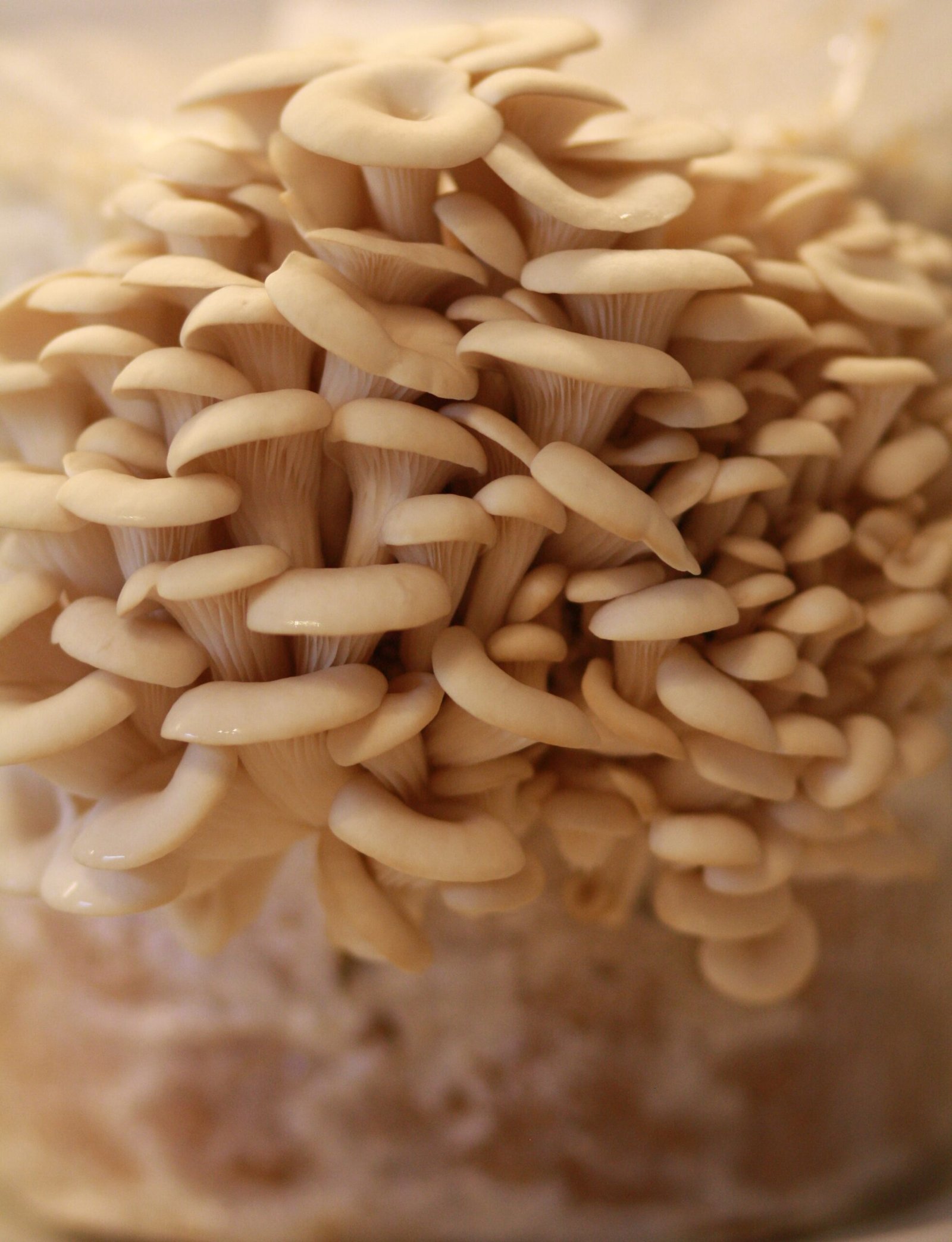
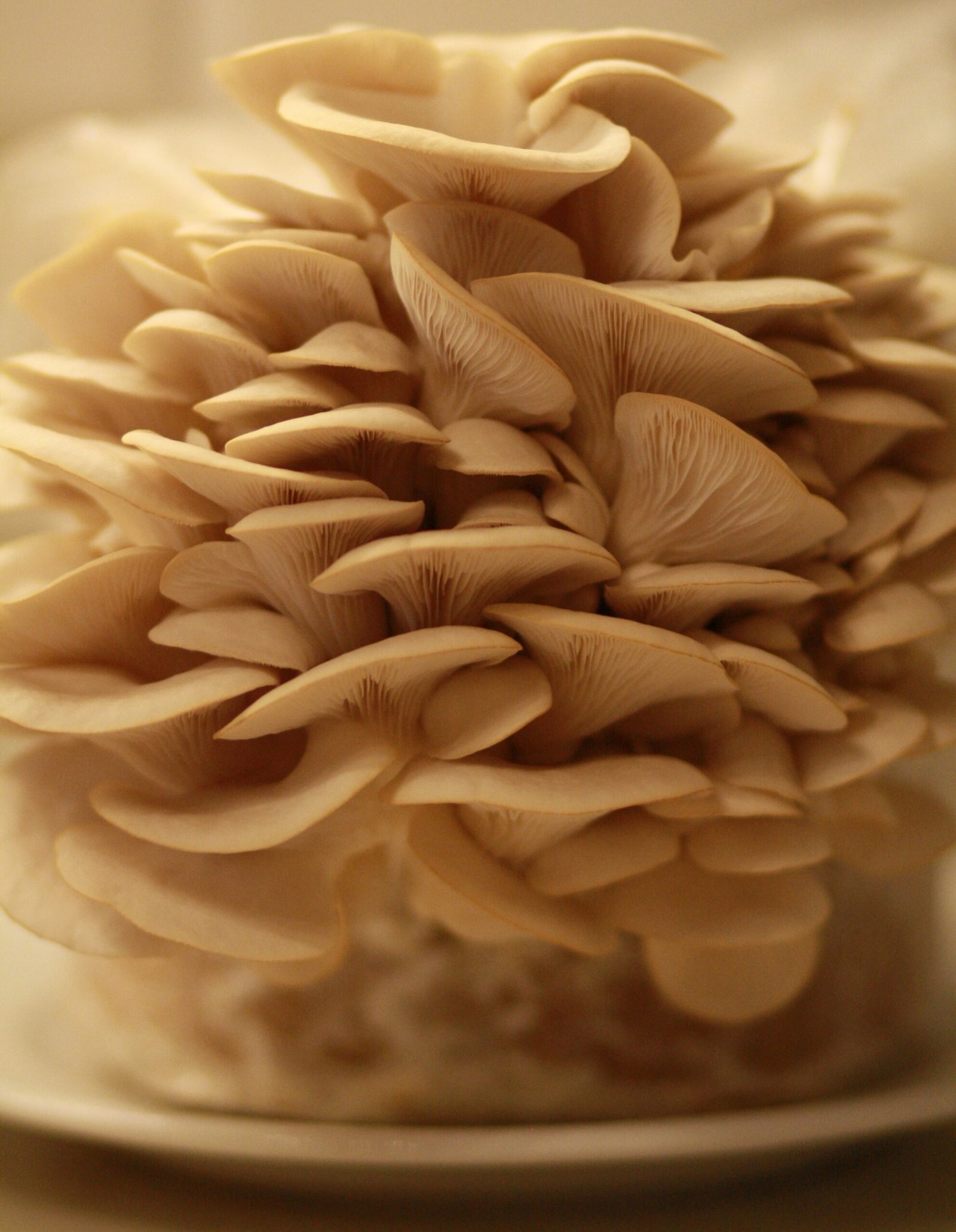
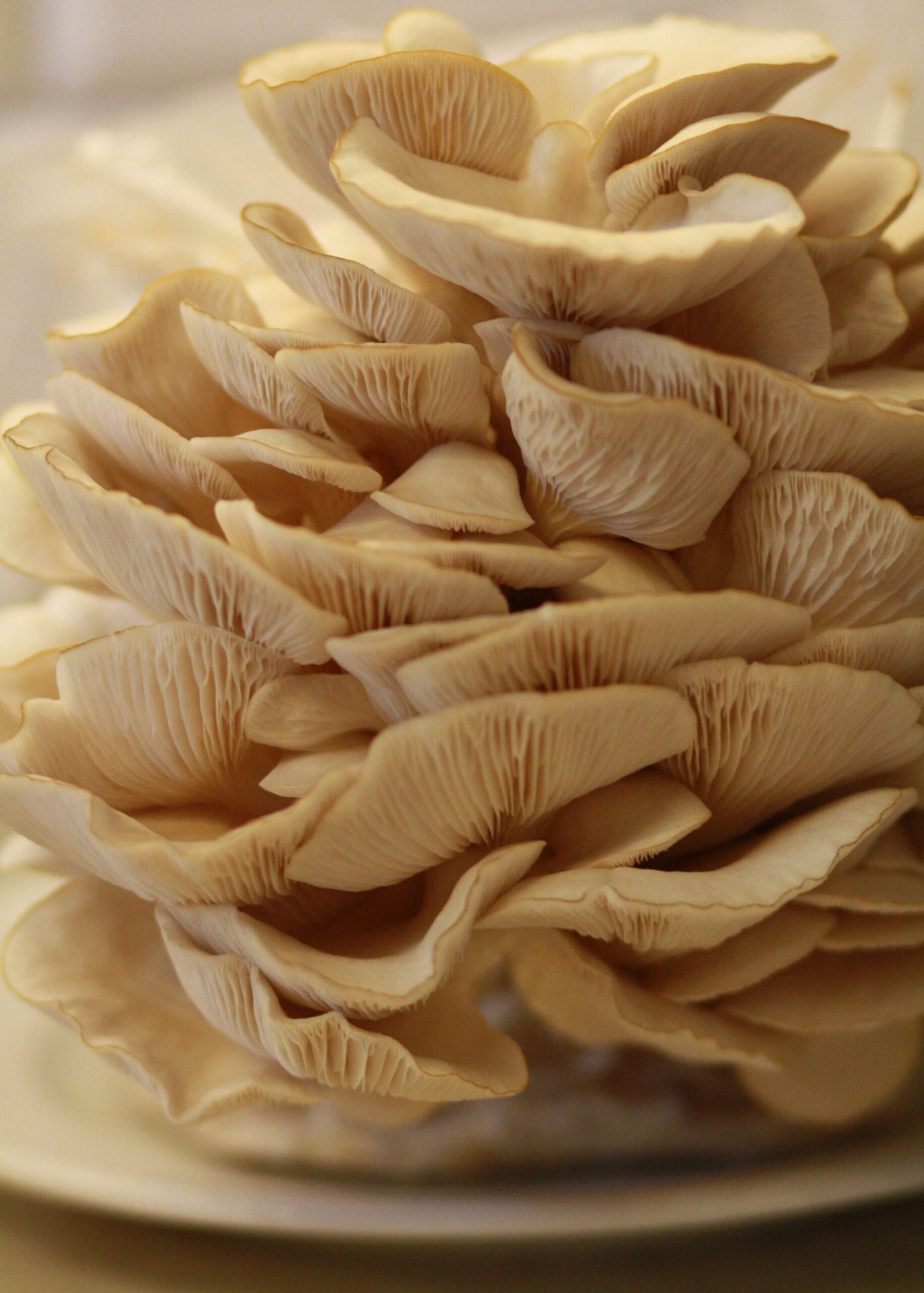
When harvesting, it is best to remove the entire mushroom cluster and any smaller mushrooms or mushroom parts at the same time so that the mycelium can prepare for the next harvest.
To remove the mushrooms, use a sharp knife and cut them as close to the block as you can. It is important not to leave anything on the block, as any remaining mushroom parts can slowly start to spoil, which can spread to the entire block. There is no need to wash them, as the rest of the mushroom has not come into contact with anything.
How do I make a humidity tent?
During the winter heating season, in extreme heat, or if you simply don't have time to spray as often, you can also make a moisture tent.
Get a garbage bag or other plastic bag and poke lots of holes in it, about 1 centimeter wide. Since both the mushrooms and mycelium breathe in oxygen and release carbon dioxide, proper ventilation is essential! Cover the kit with the humidifier. When spraying, pull it up, spray the block (you can also spray a little water on the inside of the bag), and then put it back in place.
Once baby mushrooms have appeared, fresh air is especially important, so remove the humidity tent for short periods of time several times a day to allow the accumulated carbon dioxide to escape.
The opened fruit block looks very dry and has not produced fruit even after several weeks
Set up a misting tent (see above). When baby mushrooms (pins) appear, remove the misting tent and continue spraying as usual.
If the opened kit looks dry even under a humidity tent, or has dried out between harvests, you can also hydrate it by soaking it. To do this, remove the bag from the box and place it cut side down, in a bowl of cold water for 30 minutes. Then, drain off the excess water and wipe the bag dry, then put it back in the box and continue spraying as usual.
How many times can the fruit block produce? What should I do after the harvest?
Your first harvest is guaranteed by us, but usually one kit can produce 3-4, rarely even 5 times. The yield depends mostly on the environmental conditions: a delicate balance of humidity, oxygen and light. Since every room has a different microclimate, finding these optimal conditions may require some experimentation.
The first crop (also called flush) is usually the largest, then gradually, at increasingly longer intervals, smaller crops appear as the mycelium consumes all available nutrients and water.
After harvesting, it is useful to let your kit rest for 2-3 days and not humidify it at all. Let it dry out a bit, imitating the weather changes that occur in nature. After 2-3 days, continue humidifying as usual, and with a little patience, the mushrooms will probably appear again. It is not necessary to cut open the bag at another area, it can produce again in the same area.
If it still seems too dry, try using a humidity tent (see above). If the new crop hasn't started 3 weeks after harvest, there's still hope! You can also try soaking it to get it started. Place the fruit block, cut side down, in a bowl of cold water for 30 minutes. Then drain off the excess water and wipe the bag dry, then continue to hydrate as usual.
What should I do with the exhausted block?
If the block shows no signs of life after 4 weeks or turns greenish, it's probably time to say goodbye.
The produced block during the frost-free period It is worth placing it in a shady, protected place in the garden and keeping it moist. You can also place it shallowly in the ground and cover it with leaves or chopped straw. This „mushroom graveyard” can surprise you again with fresh mushrooms at the right temperature or after a heavy rain!
Alternatively, you can crumble it up as mulch for your vegetable or flower beds, or it can be a great addition to your compost pile or worm bin. Worms love it!
There is some white growth in the bag, is it mold?
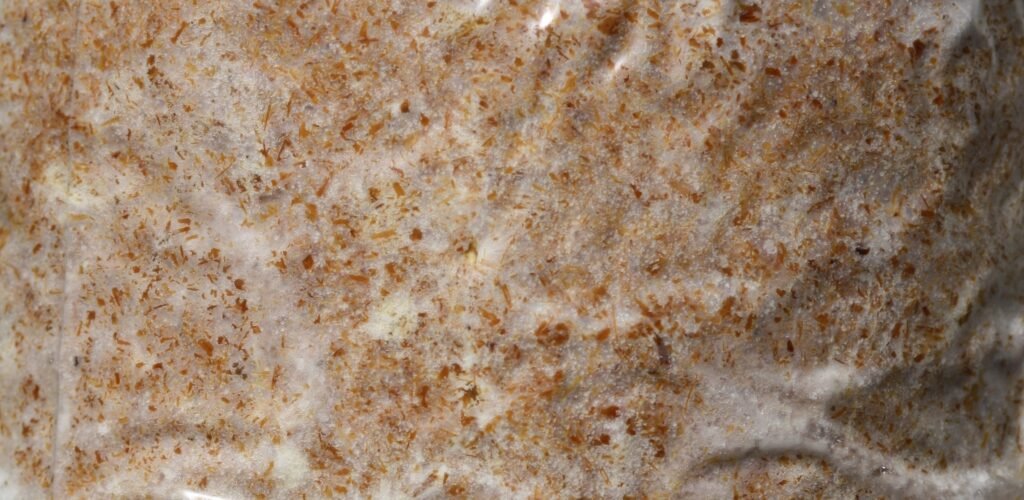
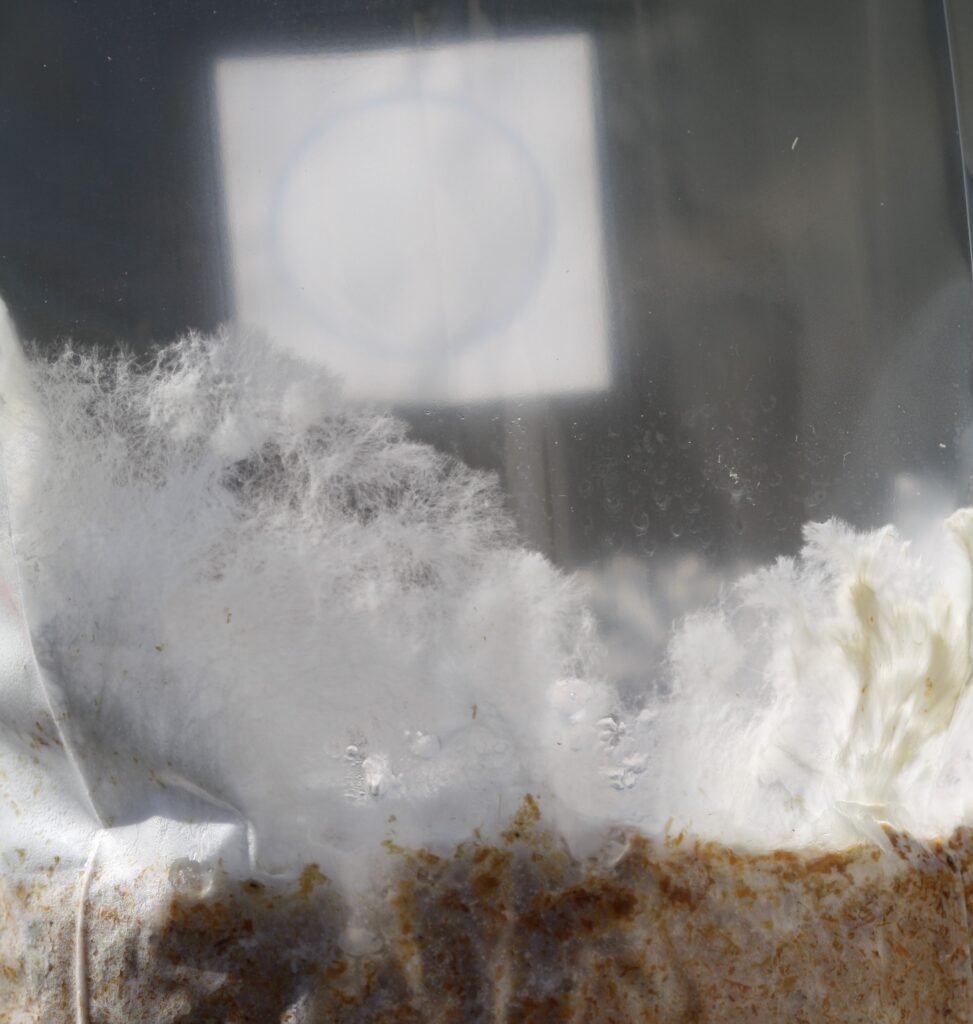
The white area you see in the bag is most likely not mold, but the fungal mycelium itself. However, if the kit has been damaged and you discover black, green, or other colored spots on the block, it is possible that other microorganisms have settled on it, contaminating it. If you are unsure, send us a picture and we will be happy to help!
The growing block arrived broken, can it still be used?
No problem, it's just a little worn from the trip. Try to gently push it back together and leave it unopened for a few days so the mycelium can stich it together. After opening it, use a humidity tent until the baby mushrooms appear (see above). It has no effect on usability.
Why is there dust under the growing mushrooms?
Oops! You probably waited too long to harvest and your mushrooms have started to spread their spores. Although they are still safe to eat, try picking them a little earlier next time (see above).
What about spores?
Spores are the reproductive material of the mushroom, which it disperses when it matures. In the case of oyster mushrooms, this happens when the edges of the caps flatten, then begin to curl upwards, and the plates at the bottom of the cap open up.
Small amounts of spores are found on all mushrooms and are harmless to consume.
In fact, various fungal spores are found everywhere in the air – constantly – and we are still breathing them in. So they are not unknown to the respiratory tract, and it has defense mechanisms against them.
A small percentage of people may be hypersensitive to spores, typically in cases of existing chronic respiratory diseases, such as asthma.
Additionally, inhaling large amounts of spores can lead to irritation and allergies in the long term, so it is not recommended for anyone. For example, if someone works on a mushroom farm, it is important to use a protective mask.
A home grow block, due to its size, can only produce a negligible amount of spores, and only periodically.
When growing indoors, there are several steps you can take to minimize the risk:
- Pick mushrooms at the right stage of maturity, when most of the caps have almost completely flattened but have not yet started to curl upwards. This will prevent the majority of spore dispersal. For visual help on this, see Detailed User Manual you can find it in the menu.
- Keep the kit in a well-ventilated room (this is also essential for the proper formation of mushrooms), and if possible, not in your bedroom, where you spend several hours a day sleeping.
- Of course, you can keep it outdoors, but this way you are tied to the weather. Depending on the variety, good results cannot be expected below 10 degrees, and in very hot weather you will have to spray it with water much more often (a fan can help). humidity tent You also have to take into account that insects will like to taste it and climb into it.
The dispersed spores only germinate when they are in permanent contact with a moist environment. If fungus grows on the walls of an apartment, it indicates a serious moisture problem and can occur without a mushroom growing kit, for example in the form of mold. Such a condition requires an urgent architectural inspection.
There are mushrooms growing in the unopened bag!
This can happen with vigorous stocks or during long-term storage at room temperature. The filter on the bag allows a small amount of fresh air to reach the mycelium, and in its impatience it begins to produce fruiting bodies. Don't worry, this will not affect further use, it will have plenty of energy left to produce a normal crop.
If the mushrooms are within reach under the cut area, just remove them, otherwise leave them alone.
Why do my mushrooms look weird?
Growing mushrooms can often take on strange shapes.
If they have unusually long stems and small caps, they probably need more fresh air. Place them in a more ventillated area, or maybe use a fan nearby periodically.
If the edges of the caps are yellowish-brown or cracked, they probably dried out while growing. Mist them more often or use a humidity tent (see above).
If the cap color is pale, they may need more natural light, place them in a brighter location (but not in direct sunlight).
What are these yellowish-brownish drops and discolorations on the surface of the block?
They are probably metabolites, metabolic products that the mycelium uses to break down the less easily accessible nutrients in the block. Their presence is normal and harmless.
The baby mushrooms started to grow, but then stopped growing
This phase sometimes takes a little longer, but if after 4-5 days the mushroom buds have not grown at all, they have probably given up, aborted. The mushroom buds will then dry out, possibly turning white as the mycelium begins to digest them.
Abortion is usually caused by a sudden change in optimal environmental conditions, such as a decrease in humidity (most often), large temperature fluctuations, insufficient fresh air.
There is no need to worry! There is still plenty of nutrients in the block for further mushrooms.
Remove all mushroom parts from the block and continue spraying. It may be several weeks before the next harvest.
If you don't see any significant change after several weeks, you can restart it by soaking it: place the fruit block, cut side down, in a bowl of cold water for 30 minutes. Then, drain off the excess water and wipe the bag dry, then continue to moisten as usual.
If you haven't used it before, try making a humidity tent (see above).
Do I need to cook the mushrooms?
Yes, all mushrooms should be thoroughly cooked before consumption. Similar to insect shells, mushrooms contain chitin, which breaks down when heated and becomes digestible. The good news is that it is almost impossible to overcook them, and fresh mushrooms retain their meaty texture even with prolonged cooking.
There are flies around the fruit block, what should I do?
Every home, especially one with houseplants, compost bins, or fruits stored on the counter, is likely to have a small population of gnats. They can even sometimes be found in water pipes. A mushroom grow kit can also be attractive to gnats, especially during the summer months.
If you notice gnats around your kit, the first step is to try to find and eliminate any other sources.
As a second step, you can make a homemade fly repellent: add a few drops of dish soap, a tablespoon of vinegar, and a tablespoon of baking soda to a glass of water. Mix it together and put it in a spray bottle. Spray it around the growing area to effectively keep flies away. Do not spray directly on the mushrooms!
If the problem persists, you can also use sticky or electric insect traps.